Agents for companies

AI agents for knowledge and recurring processes

We connect approved documents and existing systems to an AI agent. It researches, prepares drafts and plans work steps. Critical actions remain under human control.

SourcesDocumentsWikis · SOPs · Quotes
ToolsSystemsTickets · Projects · APIs
Limited taskAI agentSearches · compares · uses permitted tools
ControlApprovalBefore effective actions
ResultTraceableSources · Logs · Tests

Use cases

Tasks with context but no fixed solution path

An agent is useful when information is spread across systems and the next sensible step depends on the current result. Fully fixed processes belong in conventional automation.

01

Internal knowledge search

The agent answers questions using approved documents and shows the sources behind each answer.

02

Prepare quotes and emails

Drafts use previous quotes, style guidelines and the current case. A person reviews and sends them.

03

Assemble project context

Decisions, tickets and documents from several approved systems are brought together for a specific question.

04

Onboarding and SOP access

New employees find processes, responsibilities and work instructions without asking individual colleagues for every detail.

05

Processes with approvals

The agent researches and prepares actions. Changes and external actions remain blocked until a person approves them.

The right architecture

Not every automation needs an agent

We first check whether a simpler approach can produce the same result more reliably. An agent only makes sense when it must choose between permitted next steps.

Agents and workflows in detail
Fixed workflow

Rules determine the process

A good fit for stable processes with known steps, clear inputs and defined exceptions.

  • Predictable sequence
  • Easier to test
  • Lower operating effort
AI agent

The result determines the next step

Useful when research, tool selection or follow-up questions vary with each intermediate result.

  • Limited set of tools
  • Logged decisions
  • Approval before risky actions

Process

Read and test first. Expand only when the evidence supports it.

The first version does not change production data. This lets us test quality and limits before an error can have real consequences.

  1. 01

    Define the task and success criteria

    We select a limited use case and use real completed cases to define what a useful result looks like.

  2. 02

    Limit data and permissions

    Sources, user roles, permitted tools and approval points are defined before technical implementation.

  3. 03

    Test the agent in read-only mode

    The first version searches, compares and prepares drafts. It does not change production data.

  4. 04

    Measure the results

    A fixed test set checks quality, sources, failure cases and the human intervention required.

  5. 05

    Expand operations carefully

    Additional data sources or limited actions follow only after evaluation. Every extension receives its own test.

Data and integration

The agent receives only the access it needs

Data sources and tools depend on the task. Sources can include document stores, wikis, ticket systems, project platforms and approved APIs.

DocumentsWikisTicketsProjectsAPIs

Operational controls

  • Roles and access rights for each data source
  • Approvals for changes and external actions
  • Limits for runtime, cost and tool calls
  • Logs for inputs, actions and results
  • Repeatable tests before and after changes
Answers on security and operation

Limited pilot

A real task instead of a general demo

Scope, data access and success criteria are recorded before the pilot starts. The result supports a technical and commercial decision.

Discuss a pilot

One defined use case

A task from your daily work, not a general assistant demo.

Representative test cases

Expected results, failure cases and stop criteria are defined before evaluation.

Controlled data access

The pilot starts with only the sources and permissions needed for the task.

A decision for the next step

The evaluation shows whether to stop, adjust or move the agent into operation.

Further reading

Technology, project selection and our own experience

Foundations

What is agentic AI?

How agents choose tools, when a fixed workflow is the better fit and which limits are needed before use.

Read article
Project assessment

AI readiness in industry

A practical assessment of process, data, integration, risks and later operation.

Read the readiness check
Our own development

AI Mux for coding agents

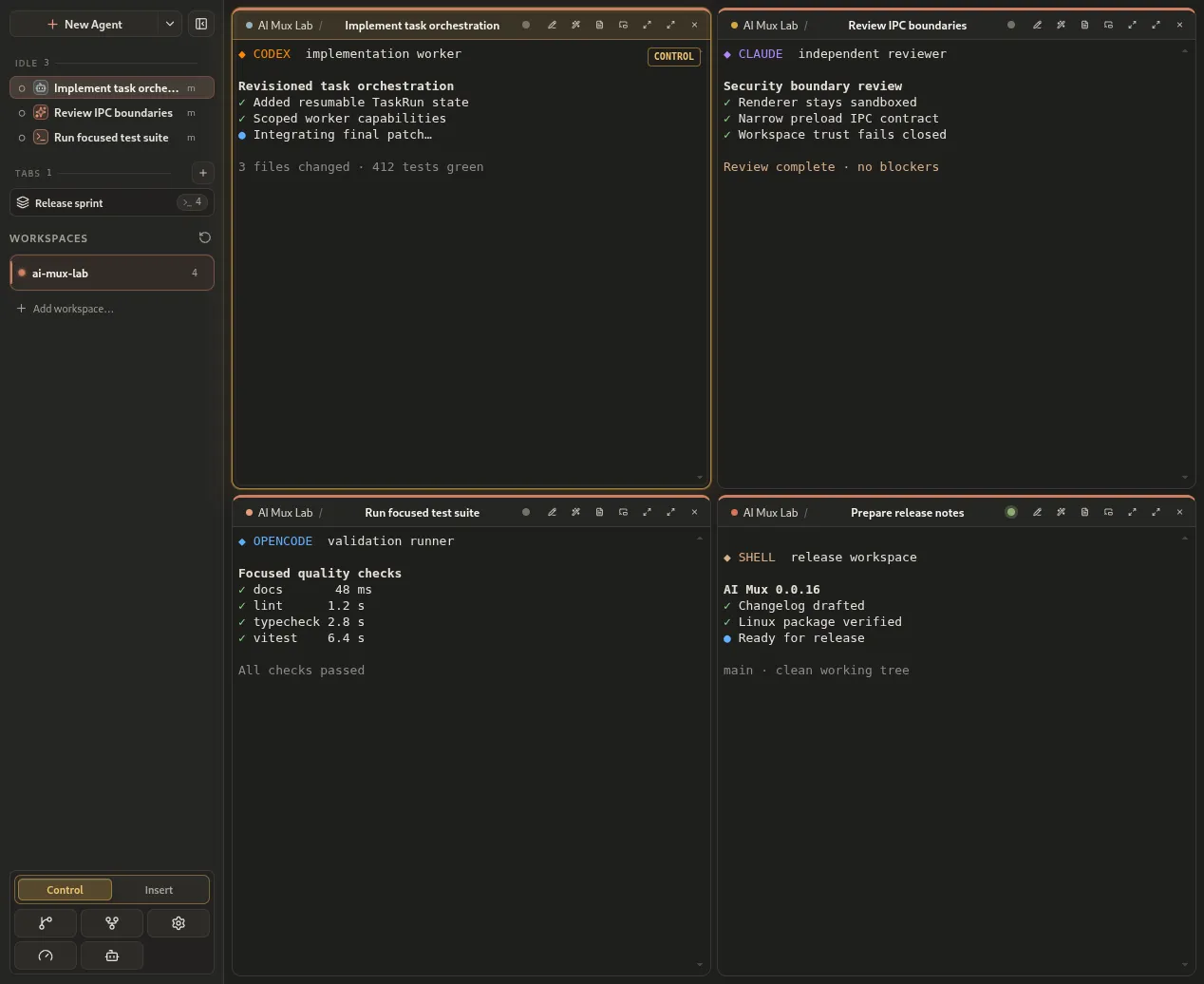
Our development log shows how we coordinate several agents and make requests for human attention visible.

Read development log

Schedule Your Free Consultation Today

Book a free consultation and discover how we can help you achieve your business goals.

Gießen office: Flutgraben 4, 35390 Gießen
Visits by appointment, Mon-Fri, 09:00-18:00
Registered office and postal address: Auf der Grube 9, 35041 Marburg
Carsten Schmidt

Carsten Schmidt

CEO